A Complete History of the Golden Gate Bridge

Discover the story behind one of the world’s most recognizable bridges, where bold engineering met history to create an enduring symbol of San Francisco.
The Golden Gate Bridge is more than just a great backdrop for photos; it is a pretty incredible feat of engineering, with a captivating history to match. When it finally opened in 1937, many people were convinced it was actually impossible to span the Golden Gate Strait. The treacherous waters and unpredictable weather made it seem like an insurmountable challenge. But, as history proves, engineering ingenuity prevailed. In this blog, we dig into Golden Gate Bridge history, covering the triumphs, setbacks, and everything that made this International Orange icon so beloved around the world.
Golden Gate Bridge:
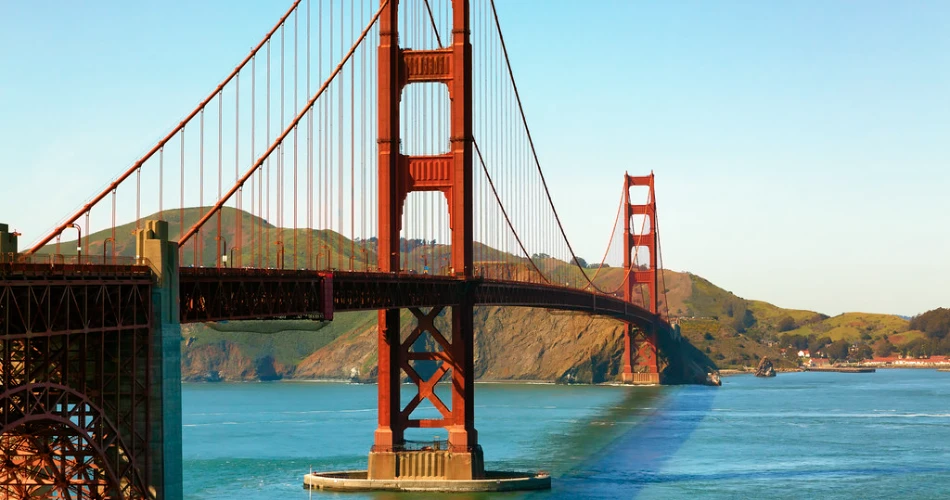
The Golden Gate Bridge SF is a suspension bridge that spans the Golden Gate Strait in San Francisco, California. Construction began in 1933 and was completed in 1937, during the depths of the Great Depression. The bridge was a collaboration between engineer Joseph Strauss, structural engineer Charles Ellis, and architect Irving Morrow.
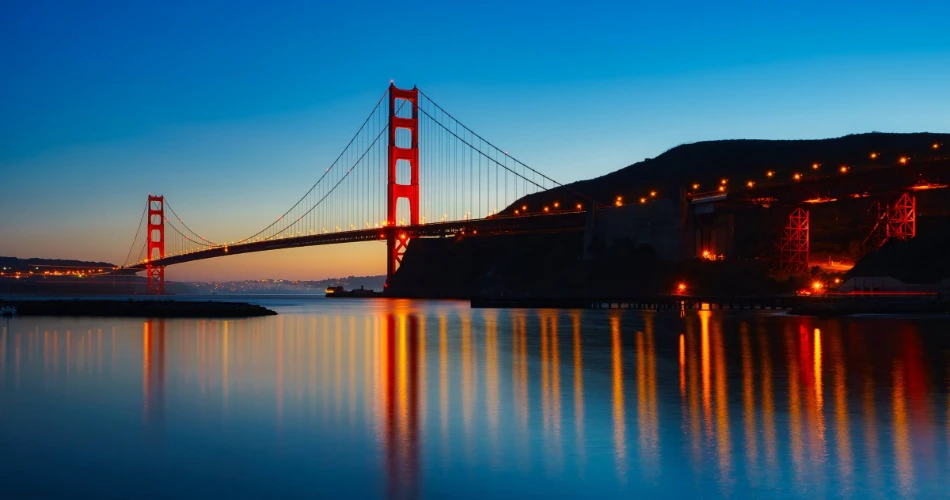
When it first opened, the Golden Gate Bridge held the title of the world’s longest suspension bridge at 1.7 miles long. At the same time, it connected San Francisco and Marin County by road for the very first time. The famous International Orange color was chosen to improve visibility through the fog. Today, the Golden Gate Bridge is widely regarded as a symbol of American engineering prowess and a testament to West Coast history.
The Need for the Golden Gate Bridge:
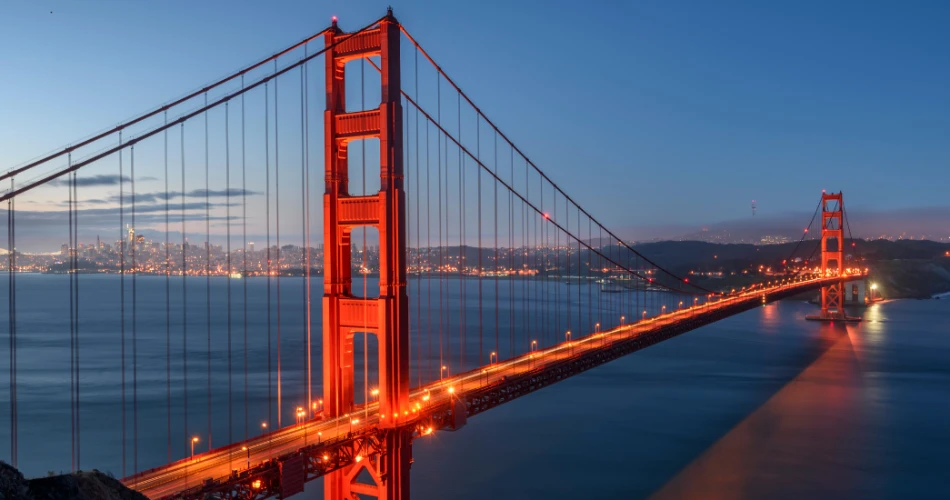
Before the Golden Gate Bridge existed, San Francisco was effectively cut off from Marin County by the Golden Gate Strait. The only way to cross was by ferry, most of which were operated by the Southern Pacific Railroad. Ferry travel was slow, weather-dependent, and unreliable, creating a bottleneck that limited trade and daily commuting.
Following the devastating 1906 earthquake, San Francisco’s population began to grow rapidly, making the need for a permanent crossing even more urgent. The U.S. Army initially opposed the bridge, fearing it would block naval access. However, engineers eventually proved that ship traffic would not be obstructed. Building the bridge became a necessity for economic growth and dependable transportation.
Design and Engineering Vision:
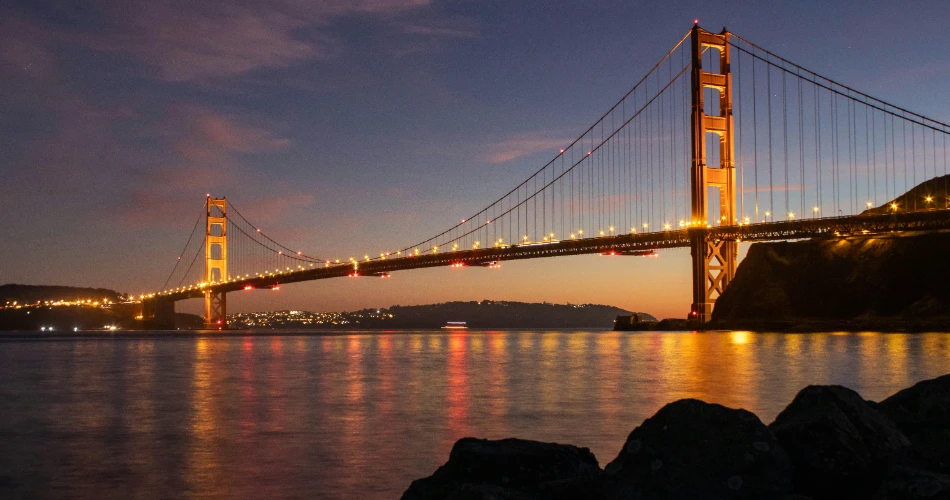
Joseph Strauss served as the chief engineer of the Golden Gate Bridge project and proposed an initial hybrid cantilever-suspension design in 1916. Structural engineer Charles Ellis later completed the complex suspension calculations, while Leon Moisseiff contributed modern suspension bridge theory to the design.
Architect Irving Morrow introduced the bridge’s Art Deco styling, favoring clean lines and simple vertical elements for the towers. In 1935, Morrow selected the International Orange color, which improved visibility in San Francisco’s fog and complemented the surrounding landscape.
The bridge’s two main cables contain more than 27,000 steel wires each, spun on-site between 1935 and 1936. The towers rise 746 feet above the water. Engineers designed the roadway to flex under wind and seismic forces, significantly enhancing the bridge’s safety and durability
The Golden Gate Bridge: Construction Begins:
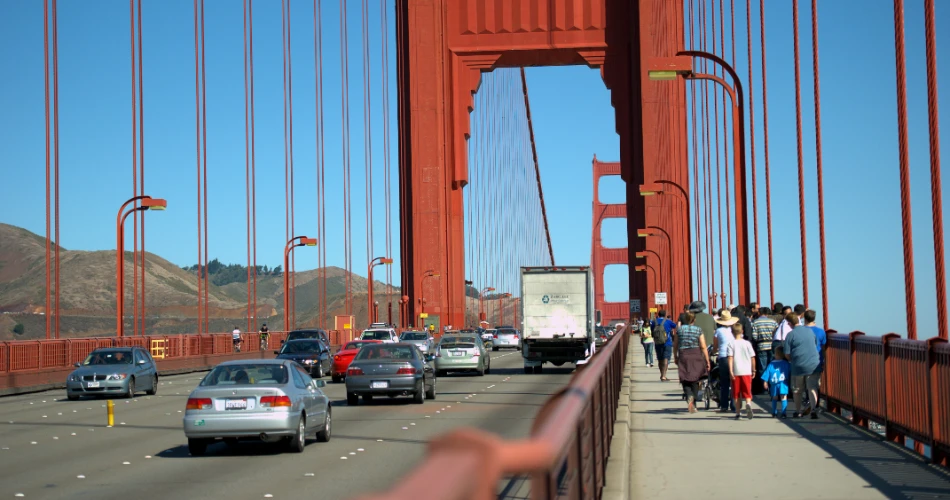
Construction officially began on January 5, 1933, under the leadership of Joseph Strauss. The project faced extreme challenges, including ocean tides moving up to seven knots, water temperatures around 50 degrees Fahrenheit, frequent heavy fog, strong winds that halted crane operations, and depths exceeding 100 feet in parts of the strait.
Despite these conditions, the total construction cost was estimated at approximately 35 million dollars. Foundation work began in early 1933. The south tower was anchored directly to bedrock 110 feet below the water’s surface. The north tower posed greater difficulty due to deeper water, requiring a steel fender and a massive cofferdam to keep seawater out while concrete was poured into the foundation chamber.
Each tower was built to a height of 746 feet, using steel supplied by Bethlehem Steel. Cable spinning began in 1935, with 27,572 steel wires used in each main cable. Workers relied on a moving wheel to spin the cables, which ultimately measured 36 3/8 inches in diameter. Vertical suspender cables supported the roadway, while derricks lifted steel roadway sections into place. Construction was completed in 1937.
Opening and Aftereffects:
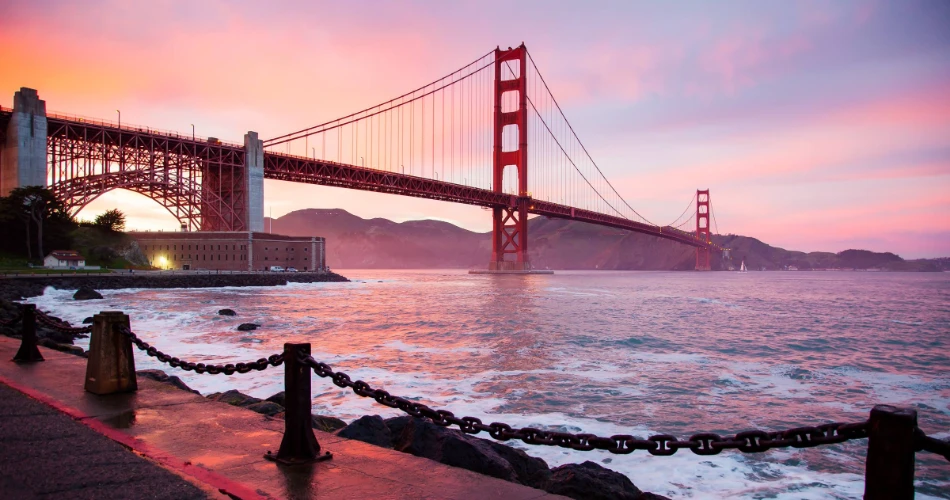
The Golden Gate Bridge was completed in April 1937. The public opening took place on May 27, 1937, when thousands of pedestrians crossed the bridge. On May 28, 1937, automobiles were permitted to use it for the first time. Local newspapers praised it as an engineering marvel.
During World War II, the bridge was heavily guarded and used for transporting military vehicles and supplies. In the decades that followed, traffic steadily increased. Ongoing maintenance includes constant repainting to prevent corrosion and the installation of modern traffic barriers. The bridge continues to carry six lanes of traffic and remains a vital link between San Francisco and Marin County, attracting millions of visitors each year. It remains one of San Francisco’s most enduring symbols.
Golden Gate Bridge Facts:
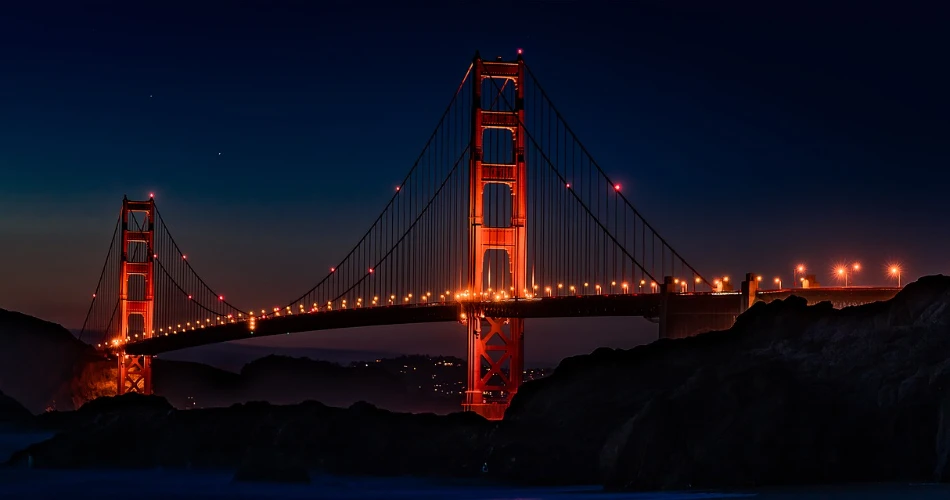
- Opened in 1937 in San Francisco, California.
- Total length: 8,981 feet (2,737 meters).
- Main span: 4,200 feet (1,280 meters).
- Tower height: 746 feet (227 meters).
- Each main cable contains 27,572 steel wires.
- Color: International Orange.
- Designed by Joseph Strauss.
- Carried military traffic during World War II.
- Seismically retrofitted in the 1990s.
- Major tourist attractionand essential traffic route.
In a nutshell, Golden Gate Bridge facts show why it is one of the most famous landmarks in San Francisco. Its strong design and rich history continue to make it truly remarkable.
Make Knights Inn your home base in San Francisco — reserve your room now for comfort, convenience, and proximity to world-famous sights.
